Astronomers Identify AT 2016blu as a Supernova Impostor
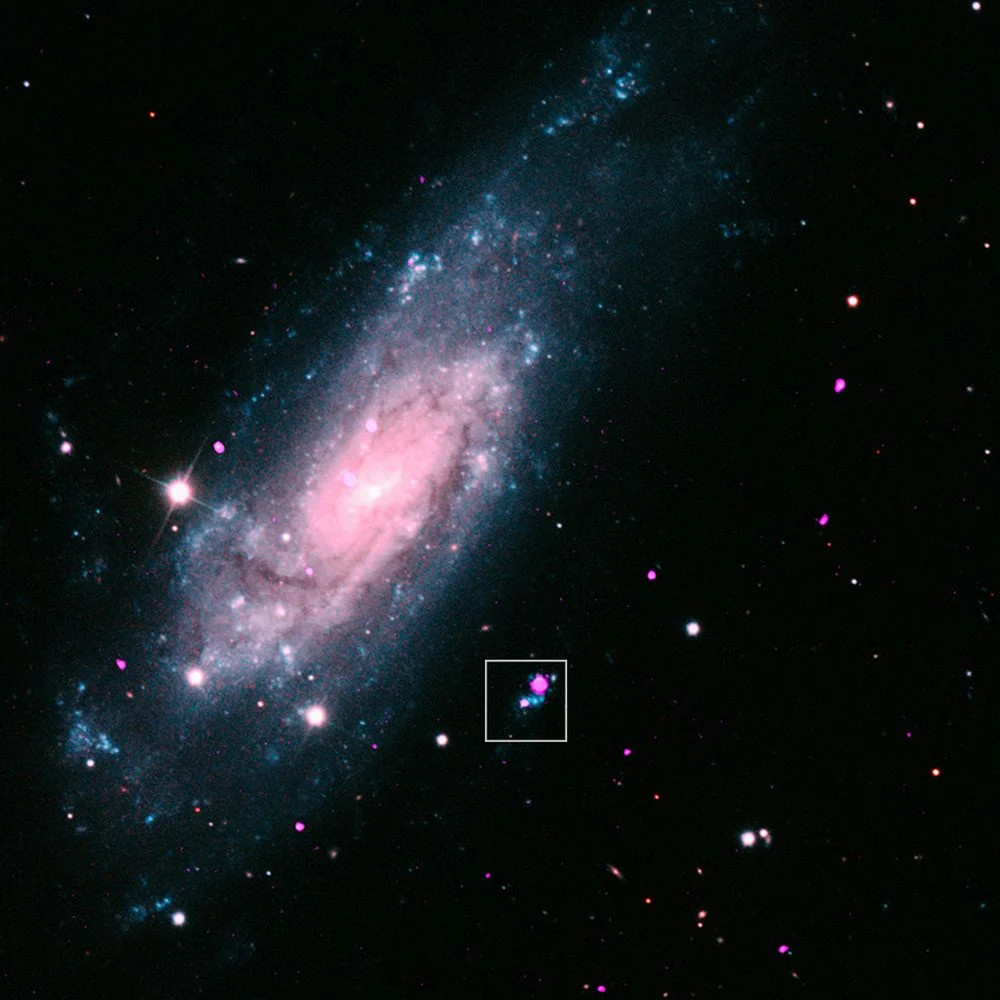
When is an apparent supernova not really a supernova? This question has gained new relevance with the recent study of a star known as AT 2016blu, which has displayed characteristics similar to supernova explosions. Unlike supernovae, which are one-time events marking the end of a star's life, AT 2016blu has been observed to produce outbursts every 113 days, a behavior that has led astronomers to classify it as a 'supernova impostor.'
Located in the spiral galaxy NGC 4559, approximately 30 million light years from Earth, AT 2016blu was first detected in 2012 during automated supernova searches. The star, which has a mass of about 33 solar masses, exhibits dramatic fluctuations in brightness, a hallmark of luminous blue variables (LBVs). These stars are known for their unpredictable behavior, yet AT 2016blu's outbursts are periodic, setting it apart from typical LBVs.
Explore on Amazon
Amazon shopping links. As an Amazon Associate I earn from qualifying purchases.
To investigate the nature of these outbursts, astronomers utilized the Chandra X-ray Observatory, renowned for its ability to capture faint sources in detail. The research, published in The Astrophysical Journal, reveals that AT 2016blu has undergone 27 outbursts from 2012 to 2026, suggesting a complex interaction with a binary companion star. The lead author, Mojgan Aghakhanloo, noted that the star's behavior had been confusing, initially appearing to act like a supernova while continuing to survive its explosive episodes.
The study indicates that the outbursts of AT 2016blu are likely triggered by interactions with a nearby compact object, possibly a neutron star or black hole. This companion star's gravitational influence causes material to be ejected from AT 2016blu, leading to the periodic brightening observed. The researchers have determined that the X-ray luminosity during these outbursts is significantly higher than previous observations, suggesting a dramatic increase in energy output.
Understanding the Mechanism Behind the Outbursts
The research team monitored AT 2016blu closely, coordinating their observations to coincide with the star's predicted outburst times. This careful timing allowed them to capture crucial X-ray data that provided insights into the underlying mechanisms of the outbursts. The findings suggest that the dense gas surrounding the star is heated by high-energy X-rays, which then causes the optical brightness observed during outbursts.
The implications of this discovery extend beyond AT 2016blu itself. It raises questions about other stars exhibiting similar behavior, potentially linking them to a broader class of phenomena involving massive star and compact object binaries. As Aghakhanloo and her colleagues conclude, expanding the sample of such systems is essential for understanding the evolutionary pathways and physical mechanisms that connect supernova impostors, LBVs, and interacting supernovae.
The Broader Impact of This Discovery
AT 2016blu stands out as the first observationally confirmed LBV system with a compact companion, marking a significant milestone in stellar astrophysics. The research not only sheds light on the nature of this specific star but also enhances our understanding of the complexities involved in stellar evolution and the classification of transient astronomical events. As astronomers continue to explore the universe, the discovery of more systems like AT 2016blu could reveal further insights into the life cycles of massive stars and the intricate dynamics of binary systems. This ongoing research underscores the importance of precise observational techniques in unraveling the mysteries of the cosmos.