Spyware Abuse in Europe: Accountability Lacking for Governments
Greek journalist Thanasis Koukakis endured a lengthy wait for justice, as it took nearly five years for a court to confirm the infection of his phone with the notorious Predator spyware. This invasive software allowed unauthorized access to his contacts, documents, and messages, and even enabled remote activation of his camera and microphone. A recent investigation by IrpiMedia, which included interviews with Koukakis and four other victims, paints a grim picture of the state of accountability regarding spyware abuse in Europe.
On February 26, a court in Athens convicted four executives associated with Intellexa, the company behind Predator spyware. Among those convicted is Tal Dilian, a former Israeli military intelligence commander. The executives face potential prison sentences of up to eight years for illegally accessing computer systems and violating data protection and telecommunications privacy laws. However, their sentences are currently suspended while they appeal, and the identities of those who ordered the surveillance remain unknown. This conviction marks a rare instance of legal action in Europe against such abuses.
Explore on Amazon
Amazon shopping links. As an Amazon Associate I earn from qualifying purchases.
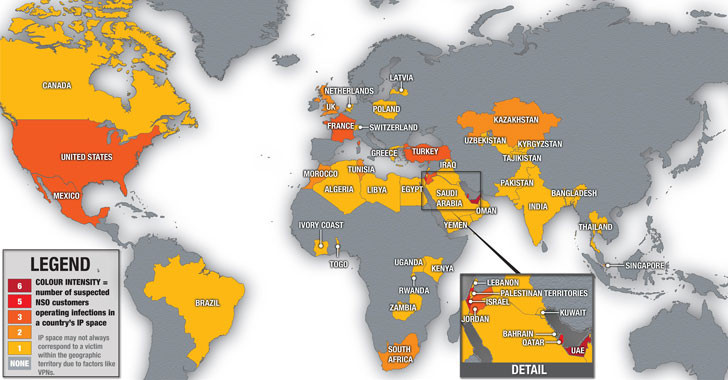
The scandal gained traction in 2021 when an international investigation led by Forbidden Stories uncovered that numerous European activists, politicians, and journalists had been targeted with Pegasus spyware, developed by the NSO Group. The company claims its products are sold exclusively to government intelligence and law enforcement agencies. Subsequent investigations revealed that other spyware firms were also implicated. For instance, Citizen Lab discovered Italian phone numbers targeted by Paragon Solutions, an Israeli company later acquired by a US investment fund. Yet, apart from Greece, these cases have not resulted in any criminal convictions.
In Spain and Hungary, victims of surveillance report difficulties in obtaining basic information about the monitoring they endured, with authorities citing national security as a reason for their silence. Rebecca White, a researcher at Amnesty International’s Security Lab, characterizes this as a form of double victimization: first, victims suffer from invasive surveillance, and then they face obstacles in their pursuit of justice. The lengthy and costly nature of legal proceedings can take a significant psychological toll on those seeking accountability.
Despite recommendations from the European Parliament’s PEGA inquiry committee following the Pegasus scandal, including the establishment of an EU fund for victims' legal costs and independent laboratories for forensic analysis, progress has been slow. Green MEP Saskia Bricmont notes that three years later, little has changed, as governments continue to hide behind national security claims.
The situation appears to be worsening, according to Sophie in ‘t Veld, the former PEGA rapporteur. She argues that governments have realized they face minimal consequences for their actions, leading to an increase in spyware cases, particularly in Italy. Polish MEP Krzysztof Brejza, also a victim of spyware, emphasizes the lack of transparency and clear processes for victims seeking justice.
Brejza's phone was infected with Pegasus while he was leading an election campaign against Poland’s ruling Law and Justice party. He reported that attackers accessed 85,000 messages spanning a decade and manipulated some conversations to discredit him. The surveillance was initiated under the pretext of an investigation into his father, a mayor, but subsequent inquiries found no grounds for such actions.
Legal Consequences of Surveillance Abuse
In October 2026, a Polish parliamentary inquiry concluded that Pegasus had been unlawfully purchased and used against political opponents. However, Brejza has only achieved civil victories, with the broadcaster forced to apologize and pay damages, while criminal investigations continue to progress slowly.
Koukakis's case highlights the challenges faced by victims of spyware. Although he identified the Predator spyware and its operator, he has not been able to determine who ordered the attacks. Court records indicate that nearly one-third of those targeted in 2020 and 2021 were also under surveillance by Greek intelligence, raising suspicions of a link. Koukakis believes his investigative reporting on legal changes benefiting individuals involved in financial crimes may have made him a target.
Greek authorities deny using Predator spyware, asserting that no laws regulated its use at the time. An Athens court referred the case for further investigation, but the Supreme Court prosecutor declined to reopen it. Koukakis has since taken his case to the European Court of Human Rights, seeking accountability.
In Hungary, investigative journalist Szabolcs Panyi discovered through analyses by Amnesty’s Security Lab and Citizen Lab that he had been spied on with Pegasus for seven months in 2019. He has only learned that the civilian intelligence agency holds classified information about him, and every request for information has been blocked on national security grounds. Panyi notes that Hungarian law permits widespread surveillance, as the justice minister, a government member, authorizes such actions.
Spain has also seen its share of spyware abuse, with at least 65 individuals linked to the Catalan independence movement being targeted between 2017 and 2020. Although the legal case was dismissed and later reopened on appeal, the government has been urged to declassify related documents. In 2022, Spain’s ombudsman confirmed that intelligence services had legally monitored 18 members of the independence movement. However, activist Elena Jiménez warns that judicial approval does not inherently make surveillance lawful, emphasizing that even progressive governments can resort to spying on political opponents.
Follow The Money
In Italy, founders of Mediterranea Saving Humans, along with activist David Yambio, were targeted with Graphite spyware from Paragon Solutions. The government justified the surveillance by citing suspicions of facilitating irregular immigration, but Casarini believes the underlying motive was their evidence of abuses against migrants in Libya and Tunisia. Italy’s parliamentary oversight body ruled all three cases lawful.
Ron Deibert, founder of Citizen Lab, warns that spyware abuse is part of a global pattern that silences victims and undermines democratic accountability. Experts argue that Europe still lacks effective safeguards and oversight mechanisms, calling for increased transparency and the ability to identify those who order and conduct surveillance. Koukakis emphasizes the need for tools that can trace the end users of spyware in real time, highlighting the necessity of accountability in addressing real threats such as terrorism or crime.