MIT Brothers Acquitted in $25 Million Ethereum Exploit Case
U.S. District Judge Jessica G. L. Clarke on November 16 acquitted two MIT brothers, Anton and James Peraire-Bueno, of all charges in the $25 million Ethereum MEV exploit case. The judge granted the brothers a judgment of acquittal on charges of wire fraud, conspiracy to commit wire fraud, and conspiracy to commit money laundering. The decision hinged on the functionality of the code involved in the alleged scheme: the falsified data within it did not deceive any systems, as the software on the other end did not utilize that information. This ruling concludes the first criminal prosecution based on an Ethereum MEV exploit, following a previous mistrial due to a jury deadlock in November 2025.
The court's opinion detailed the events of April 2023, where the brothers executed a scheme involving eight bait transactions designed to attract sandwich bots—automated traders that profit by positioning their trades around a victim's order. When these bots aggregated their trades into a block, the brothers managed to view the contents before finalization and substituted their own transactions, allegedly siphoning off approximately $25 million in a mere 12 seconds.
Explore on Amazon
Amazon shopping links. As an Amazon Associate I earn from qualifying purchases.
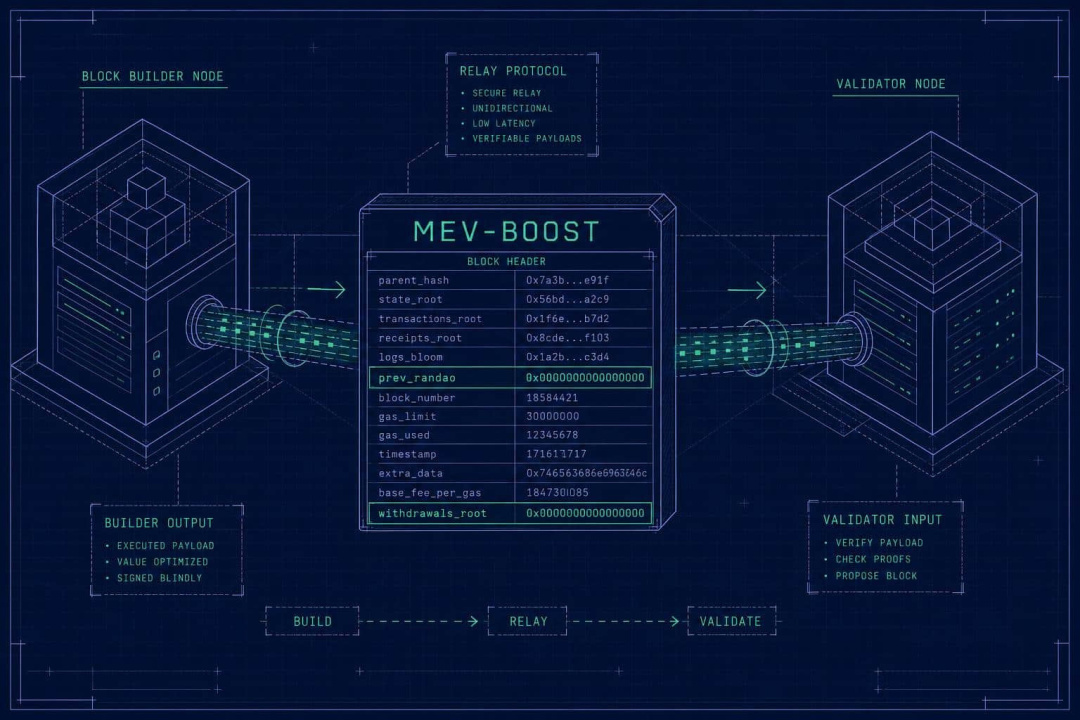
This exploit utilized MEV-Boost, an open-source software introduced by Flashbots in 2022, which allows Ethereum validators to outsource transaction ordering to specialized block builders. The relay system involved passed proposed blocks from builders to validators. In the case described by the court, the validator signed a block header—essentially a summary of its contents—with two critical fields set to zero. The Ultrasound relay failed to verify these fields, a vulnerability that highlights potential oversights even in audited software protocols, and proceeded to deliver the block contents regardless.
This lack of oversight ultimately undermined the prosecution's case. For wire fraud to be established, there must be a material misrepresentation, and Judge Clarke determined that the falsified fields had no impact on the recipient's behavior. Her reasoning suggested that a lie that no one relies upon cannot be deemed material.
Legal Distinctions in Ethereum Operations
While the scheme may have violated the ethical principles of MEV-Boost, the judge concluded that this alone did not constitute fraud. She emphasized that Ethereum operates in a "trustless, highly adversarial environment" devoid of the protections found in regulated markets. Consequently, the money laundering charge collapsed alongside the fraud counts, as it was contingent on the alleged ill-gotten gains.
The Part Nobody Mentioned
An illustrative example presented during the trial showcased the one-sided nature of the 12-second transaction: prosecutors demonstrated a scenario in which a bot exchanged $2.3 million in USDC for a mere $8.25 worth of Shiba Inu tokens before the brothers intervened.
Judge Clarke clarified that the court's inquiry was not about the morality of the brothers' conduct or whether it breached uncharged laws. The acquittal was based solely on the sufficiency of the evidence presented; it did not imply that MEV exploits are legal. The case has now been officially closed, with no retrial anticipated.