Six Nigerians Extradited to US Over Massive Romance Scam
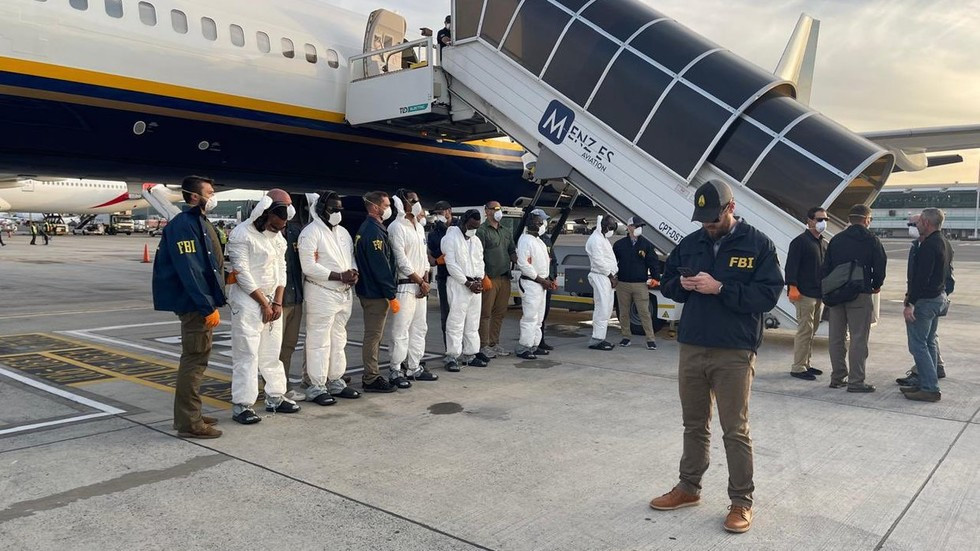
In a significant move against organized crime, South Africa has extradited six Nigerians to the United States, where they are wanted on charges of wire fraud and money laundering. The suspects are believed to be part of the notorious Black Axe crime syndicate, which has been implicated in elaborate online romance scams that targeted more than 100 women, resulting in estimated losses exceeding 100 million rand (approximately $5.8 million).
According to South Africa’s Directorate for Priority Crime Investigation, commonly known as the Hawks, the victims of these scams included both pensioners and businesspeople. These individuals were lured into online relationships with the suspects, who then manipulated them into sending money under various pretenses.
Explore on Amazon
Amazon shopping links. As an Amazon Associate I earn from qualifying purchases.
Hawks spokesperson Colonel Katlego Mogale explained that the investigation was complex and took several years to complete. The online nature of the crimes necessitated a thorough tracing of financial transactions to link the money back to the individual suspects. "There had to be proper investigation and proper money trail to be traced back to individual suspects," Mogale stated.
The investigation revealed that while romance scams are often perpetrated by individuals, the suspects in this case had escalated the operation into what Mogale described as "an actual regular business."
The extradition took place on Friday at Cape Town International Airport, where the suspects were handed over to officials from the FBI and the US Secret Service. They were transferred from a correctional facility with the assistance of Interpol South Africa before boarding a 16-hour flight to the US.
Details of the Arrest Operation
These six individuals were among eight Nigerian nationals arrested in South Africa during a major operation by the Hawks in 2021. In February 2024, the Cape Town Magistrate’s Court ruled in favor of their extradition. Two other suspects from the same operation, Enorense Izevbiege and Toriseju Gabriel Otubu, had different fates; Izevbiege was sent to the US, while Otubu was granted bail of 210,000 rand under specific court conditions.
The Black Axe organization traces its origins to a student movement established at Nigeria’s University of Benin in 1977. Over the decades, it has evolved into a transnational criminal network associated with cyber fraud, money laundering, and various other crimes. The group has faced multiple international crackdowns, including a significant Interpol operation in 2024 that resulted in approximately 300 arrests across 21 countries.
What Lies Ahead for the Suspects
This extradition not only highlights the international cooperation in combating organized crime but also underscores the growing prevalence of online scams that exploit vulnerable individuals. As technology continues to evolve, so too do the tactics employed by criminals, making it imperative for law enforcement agencies worldwide to adapt and respond effectively.
As the six suspects face charges in the US, the unfolding legal proceedings will likely reveal more about the inner workings of their operation and the broader network of the Black Axe organization. The outcomes of these cases may provide crucial insights into how such scams are orchestrated and the measures that can be taken to prevent future occurrences. The situation remains fluid, with many questions still unanswered regarding the full extent of their activities and the potential for further arrests.