Ohio Senate Race Ads Link Husted to Bribery Allegations
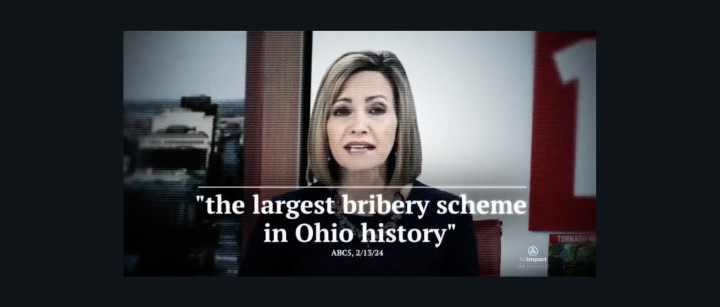
In the Ohio Senate race, Democratic ads have spotlighted a political bribery scandal involving FirstEnergy, an energy company that gained from a 2019 nuclear bailout law. The advertisements assert that Republican Senator Jon Husted supported this legislation and that FirstEnergy financially backed his campaigns. However, Husted has not been charged with any wrongdoing, a fact that the ads may obscure for voters.
The scandal has led to significant legal repercussions, including federal and state charges against lobbyists, former FirstEnergy executives, and former Ohio House Speaker Larry Householder, who was sentenced to 20 years in prison in 2023 for orchestrating a racketeering conspiracy involving approximately $61 million in bribes to ensure the passage of the bailout bill. This legislation imposed monthly fees on consumers' electric bills, generating over $1 billion over seven years to support nuclear power, a move FirstEnergy pursued to protect its two failing nuclear plants. In a settlement with federal prosecutors, FirstEnergy paid $230 million in penalties in 2021.
Explore on Amazon
Amazon shopping links. As an Amazon Associate I earn from qualifying purchases.
Husted served as Ohio's lieutenant governor from 2019 until 2025, when he was appointed to the U.S. Senate seat vacated by Vice President JD Vance. His opponent in the Senate race, Democrat Sherrod Brown, has been vocal about the implications of Husted's connections to the bribery scandal.
One advertisement from Brown features rapid-fire TV news clips stating, "now to the largest bribery case ever in Ohio," followed by the assertion that Husted's name repeatedly surfaces in connection to the scandal. The ad claims, "FirstEnergy spent millions bribing public officials. The executives spent at least $3.5 million to help Husted’s campaign. Husted was referred to as FirstEnergy’s ‘golden boy.’ Husted led the charge for a billion-dollar bailout and cost you thousands on your electricity. Jon Husted got paid. Ohio got the bill."
While the ad's elements are factually accurate, their presentation may mislead viewers into believing that Husted has been accused or charged with accepting bribes, which is not the case. Another ad funded by Democratic groups claims that Husted was at the center of the largest corruption scheme in state history, alleging that FirstEnergy made a secret $1 million payment to a dark money group that ultimately supported Husted's campaign.
FirstEnergy's Financial Ties to Husted
FirstEnergy's contributions to Husted's campaigns total $3.5 million, with the $1 million payment going to a group that then funneled money into a super PAC backing Husted's 2017 gubernatorial run. The use of dark money in politics, while often criticized, remains legal under certain conditions, including that these groups operate independently of campaigns.
Husted has defended his support for the energy legislation, asserting that it was essential for preserving nuclear energy in Ohio. His campaign spokesperson has labeled the ads as "baseless lies," arguing that while some statements are accurate, the way they are connected creates a misleading narrative about Husted's involvement in the scandal. Text messages released during the investigations indicate that Husted was in contact with FirstEnergy executives regarding the legislation, with some messages suggesting that they were actively working to secure a more favorable bailout package.
The FBI's investigation into the scandal has resulted in multiple arrests, including that of Householder and several lobbyists. Householder's organization, Generation Now, was also implicated in the bribery scheme, receiving funds from FirstEnergy to support candidates who would back Householder's leadership. The fallout from the scandal has led to significant legal actions against various individuals involved, with ongoing trials and investigations.
What They Hid
Despite the allegations surrounding the scandal, experts have pointed out that attributing the rise in electricity costs solely to the bailout legislation is misleading. The average monthly electricity bill in Ohio has increased since the law's enactment, but factors such as rising demand from data centers and international energy market fluctuations have also contributed to this trend.
In summary, while Husted's connections to FirstEnergy and his support for the controversial legislation are clear, the ads' implications of wrongdoing without any charges against him raise questions about the narrative being presented to voters. As the Senate race unfolds, the impact of these allegations and the ongoing legal proceedings will likely continue to shape the political landscape in Ohio.