Salvador Dali Artwork Stolen in French Museum Heist
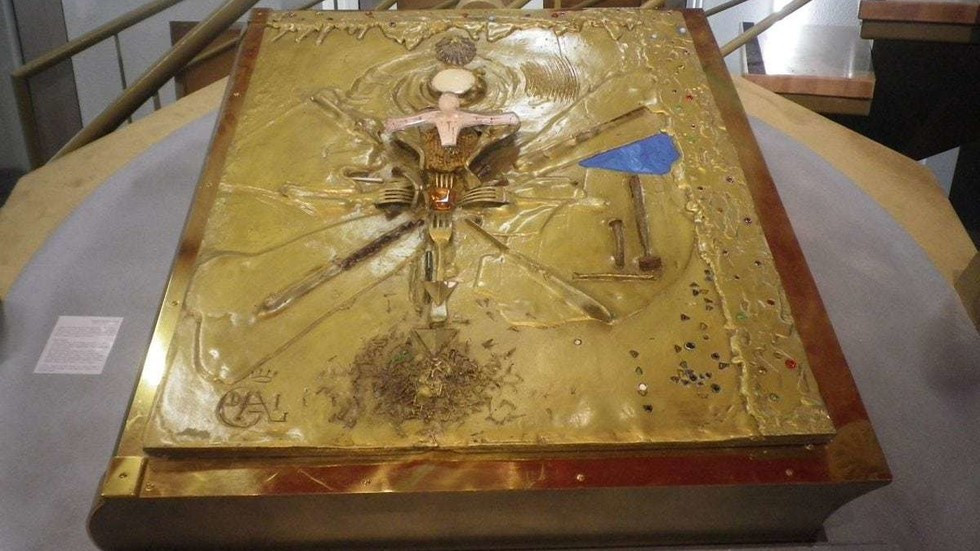
A multimillion-euro artwork featuring a massive bronze cover designed by Salvador Dali has been stolen from a museum in central France, the latest incident in a troubling series of high-profile thefts targeting the nation’s cultural institutions. The artwork, known as Joseph Foret’s ‘Livre de l’Apocalypse’ (The Book of the Apocalypse), is a monumental 210kg volume created between 1958 and 1961, featuring contributions from notable figures in 20th-century art and literature, including Dali himself, Jean Cocteau, and Bernard Buffet.
The theft occurred overnight at the Centre of Contemporary Art in Issoire, prompting prosecutors to describe the work as an “exceptional and unique” piece of “great value.” A criminal investigation has been initiated to track down the culprits behind this audacious heist. The stolen book is encased in a roughly 150kg bronze casing, adorned with gold, precious stones, and seashells, making it one of the heaviest and most expensive books in the world, valued at several million euros.
Explore on Amazon
Amazon shopping links. As an Amazon Associate I earn from qualifying purchases.
The Issoire theft is just the latest in a series of brazen robberies that have plagued French museums in recent months. In September, thieves broke into the Renoir Museum in Cagnes-sur-Mer, stealing four paintings valued at €9 million ($10.1 million), of which two remain missing. Earlier in July, a group of three masked thieves raided the Lalique Museum, escaping with 27 valuable pieces worth €4.5 million in a mere 11 minutes. Despite the museum receiving “special attention” following the infamous Louvre robbery, its security measures failed to prevent the incident.
National Outcry Over Museum Security Failures
The string of thefts has sparked a national scandal regarding museum security, leading to a parliamentary inquiry that uncovered significant shortcomings in infrastructure and staffing. The inquiry revealed that only 23% of French museums had an emergency and risk-prevention plan in place by 2024, and just 54% had video surveillance systems. The government’s response included a new 33-point museum-security plan unveiled in July, though it did not specify how these measures would be funded.
What They Hid
Amidst these security concerns, France has also seen cuts to its heritage budget, with a reduction of €106 million (8%) for 2026, while military spending has increased significantly. The Louvre alone lost €5 million in funding, raising questions about the prioritization of cultural heritage versus defense.
As the investigation into the Issoire theft unfolds, the question remains: how will France address the glaring vulnerabilities in its museum security? The recent wave of thefts not only threatens the integrity of cultural institutions but also highlights the need for a reevaluation of funding priorities in safeguarding the nation’s artistic heritage.