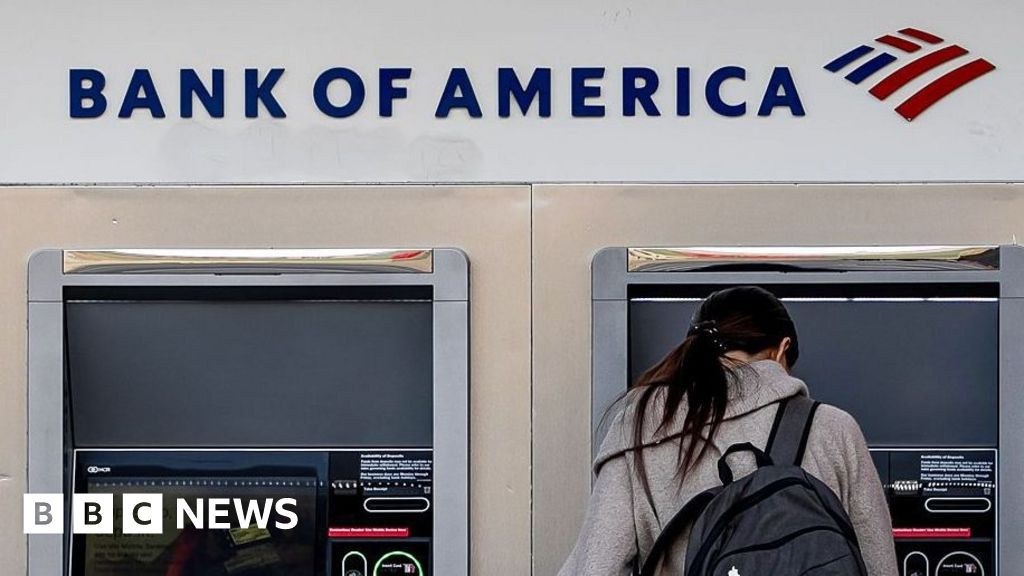
Bank of America Faces $1.2 Billion Penalty Amid Profit Shortfalls
Bank of America has reported a disappointing third quarter, missing profit estimates primarily due to challenges in its capital markets business. The bank disclosed a substantial $1.2 billion charge connected to a regulatory penalty for its failure to identify potential money-laundering activities, which has raised concerns about its compliance practices.
The decline in capital markets activity follows a strong performance earlier in the year, as a prolonged selloff in the bond market has pushed yields to multi-decade highs. For the quarter, Bank of America's sales and trading revenue fell by 5% to $5.1 billion, significantly impacted by weaknesses in fixed income, currencies, and commodities. The bank had previously projected that its quarterly sales and trading revenue would remain relatively flat compared to the previous year.
Explore on Amazon
Amazon shopping links. As an Amazon Associate I earn from qualifying purchases.
Investment banking fees also saw a decline, dropping 11% to $1.8 billion. This decrease was anticipated, as the bank had indicated last month that it was not well-positioned in certain areas that experienced more activity. Consequently, Bank of America slipped from third to fourth place in the global investment banking rankings for the first nine months of 2026, according to Dealogic data.
The reported profit for the three months ending September 30 was $6.9 billion, or 91 cents per share, down from $8.3 billion, or $1.04 per share, a year earlier. Excluding the regulatory settlement charge, the bank's earnings per share were $1.08, falling short of the estimated $1.10, as compiled by LSEG.
The regulatory fine, revealed recently, is a result of Bank of America's failure to report over $5 billion in suspicious activities to the U.S. government. This penalty, which stands as the third-largest in U.S. Treasury history, highlights the increasing regulatory scrutiny faced by major financial institutions regarding their ability to combat money laundering.
Regulatory Measures Following Financial Penalties
In response to the penalty, Bank of America has been placed under a consent order, a significant regulatory measure requiring the bank to collaborate with a third party to improve its ability to identify and report suspicious transactions that had previously gone undetected. Analysts on Wall Street have expressed concerns that this penalty may contribute to negative sentiment surrounding the bank, particularly regarding its expenses and the duration of the consent order.
This latest penalty follows a consent order issued in 2024 by the Office of the Comptroller of the Currency, which mandated that Bank of America address its deficiencies in monitoring money laundering activities. Since late 2023, the bank has been working closely with U.S. regulators to enhance its safeguards against money laundering and other illicit transactions.
Regulatory Challenges and Financial Implications
The financial implications of these developments are significant, as the bank must navigate both the immediate impact of the penalty and the broader ramifications of increased regulatory scrutiny. The ongoing challenges in the capital markets and investment banking sectors further complicate Bank of America's position, as it seeks to restore investor confidence and improve its compliance measures.
As the bank continues to work with regulators, the effectiveness of its reforms and the management of its financial performance will be closely monitored by analysts and investors alike. The evolving landscape of regulatory compliance in the financial sector poses ongoing challenges, and Bank of America's experience serves as a cautionary tale for other institutions facing similar scrutiny.