The Dangers of Street Power in Democratic Governance
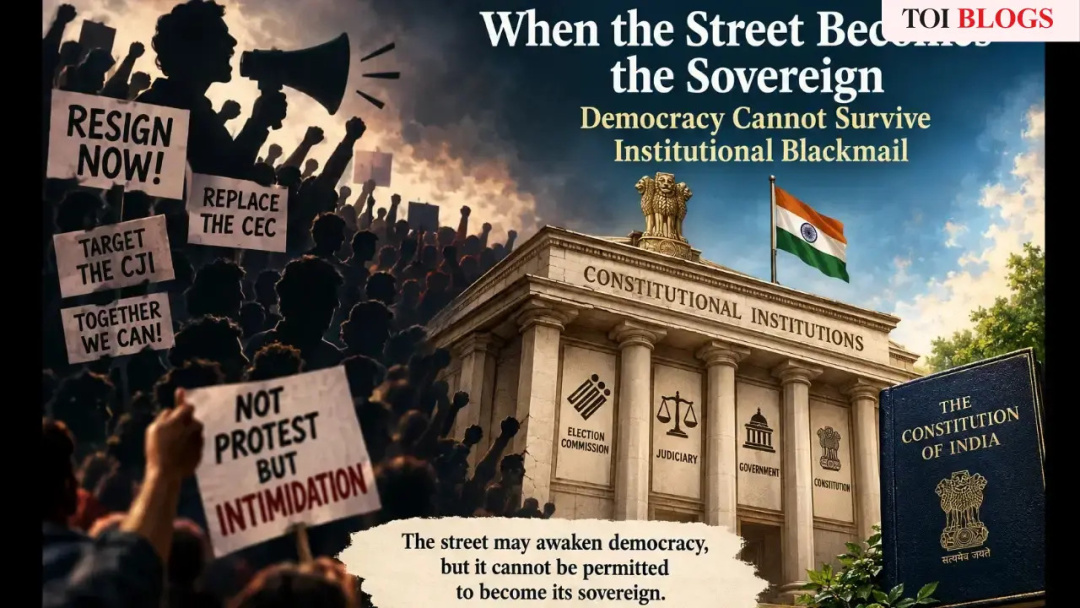
Democracy, often lauded for its principles of representation and dissent, faces a critical challenge when street power begins to overshadow institutional authority. The right to protest is an essential democratic tenet, yet when protests dictate who governs and which authorities remain, democracy risks becoming a hostage to those who can rally the loudest crowds. The distinction between a democratic majority and a vocal minority is crucial; democracy must protect the majority's mandate against coercion from organized minorities seeking power through intimidation.
Recent events surrounding the Chief Justice of India (CJI) have sparked a necessary debate on this issue. The agitation led by the Citizens for Justice and Peace (CJP) resulted in the resignation of Union Education Minister Dharmendra Pradhan over examination irregularities. While accountability for administrative failures is vital, one must question whether such resignations should be celebrated or scrutinized for their implications on constitutional authority. If the resignation of a minister becomes a trophy in a campaign against constitutional figures, where does this logic lead?
Explore on Amazon
Amazon shopping links. As an Amazon Associate I earn from qualifying purchases.
The trajectory seems troubling: first, the CJI becomes a target, followed by the Home Minister and even the Prime Minister. The insinuation is clear: concede one demand, and another will follow. This cycle of appeasement, akin to feeding a crocodile with the hope of being spared, rarely abolishes the appetite for more. The core question is whether political dissatisfaction entitles an organized movement to make institutional capitulation a condition for public peace. If this principle is accepted, the essence of constitutional governance is at stake.
Consider the Supreme Court's role in this dynamic. When its decisions align with public sentiment, it is hailed as a guardian of liberty. Conversely, when its judgments disappoint, it risks becoming vilified. Such transactional reverence cannot sustain a democracy. The authority of courts should not hinge on the satisfaction of every litigant or faction; rather, it must be rooted in the rule of law and constitutional integrity. The recent ridicule directed at the CJI by political figures exemplifies how institutional disagreements can devolve into personal attacks, further eroding the dignity of the judiciary.
Looking beyond India, similar patterns have emerged in countries like France, Belgium, and Italy, where protests driven by various grievances have escalated into violence and destruction. While citizens have the right to demand change in the face of economic insecurity or unpopular policies, the line between legitimate protest and coercive intimidation must remain clear. The stability of democracy and development hinges on this distinction. If street violence becomes the norm for effecting change, the very foundations of democracy could crumble.
The Challenge of Street Pressure on Governance
The unsettling precedent set by allowing sustained street pressure to compel governmental change raises critical questions. Would future governments govern by constitutional mandate or by anticipating the next wave of protests? Would the Election Commission operate independently, or would it adjust its actions based on potential public backlash? The principle that street pressure can override institutional processes poses a dangerous incentive for political factions, reducing the people's mandate to a mere inconvenience.
This is not an argument for complacency regarding institutional failures. Scrutiny and accountability are necessary for compromised institutions. However, the corrective measures must adhere to constitutional processes—evidence, investigation, judicial review, and lawful removal procedures. Peaceful protest can highlight injustices and demand accountability, but it cannot become a tool for dictating institutional outcomes through intimidation.
The Risks of Institutional Erosion
Institutions must remain accountable to the Constitution, not to political convenience. Citizens must insist on both principles simultaneously. Those who champion democracy cannot justify coercion merely because it serves their political goals. The true test of democratic principles lies in the willingness to uphold the same standards when faced with opposing views.
Democracy does not require blind allegiance to every institution; it mandates the preservation of rules that allow for corrections without destruction. If every defeat is perceived as conspiracy and every concession invites further demands, the ultimate casualty will not be a single minister or government but the constitutional order itself. While the street may awaken democracy, it must not be allowed to become its sovereign.